
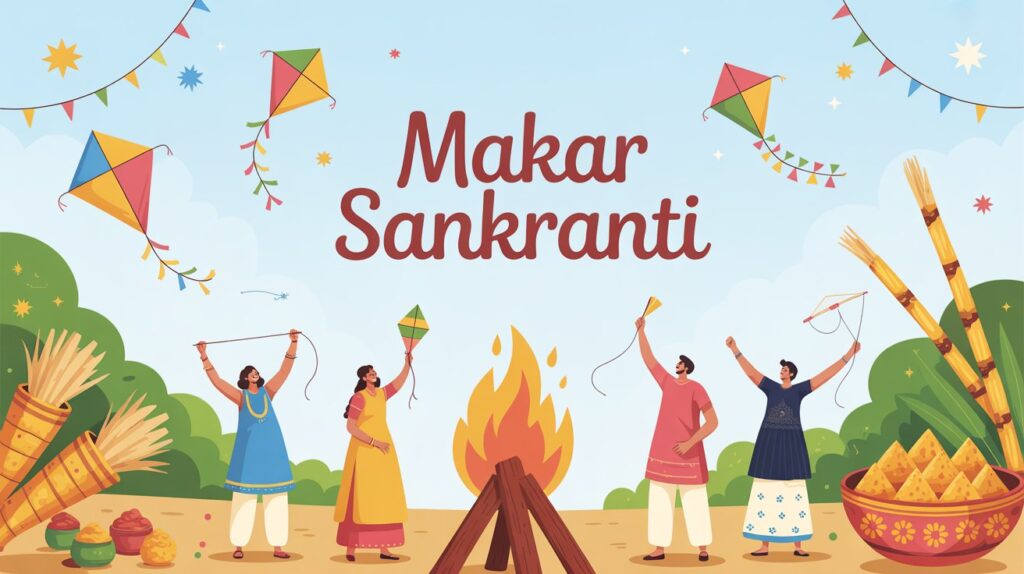
Makar Sankranti is one of those festivals that instantly lights up winter days in India — from bright kites filling the sky to the aroma of til-gud sweets everywhere. But beyond the fun and celebrations, this festival holds deep cultural, scientific, and spiritual significance.
Let’s break it down in the simplest, most complete way.
What Is Makar Sankranti?
Makar Sankranti is a Hindu harvest festival that marks the Sun’s transition into the zodiac sign Capricorn (Makara Rashi), symbolizing the beginning of longer and warmer days.
It’s celebrated every year on 14 January, making it one of the few Indian festivals that fall on a fixed date.
This transition is known as Uttarayan, meaning the Sun starts moving northward, bringing positivity, growth, and prosperity — which is why it’s considered so auspicious.
Historical & Mythological Background of Makar Sankranti
1. The Sun’s Transition (Surya Dev)
The festival honors Surya Dev (Sun God). Ancient texts say that from this day, the Sun’s energy becomes more powerful, and nature begins to rejuvenate.
2. Bhishma Pitamah’s Story (Mahabharata)
According to the Mahabharata, Bhishma Pitamah chose to leave his body on the holy day of Makar Sankranti because it is believed that a soul departing during Uttarayan attains moksha (liberation).
3. A Festival With a Fixed Date
Unlike Diwali or Holi, which depend on the lunar calendar, Makar Sankranti is based on the solar calendar, making it fall on 14 January almost every year.
Scientific Significance of Makar Sankranti
1. The Sun Enters Capricorn
Astronomically, this day marks the Sun’s entry into Capricon. This is when:
- Winter starts decreasing
- Daytime begins increasing
- Energy levels and mood naturally improve
2. Start of Longer Days
This transition symbolizes movement from darkness toward light — from winter’s peak toward spring warmth.
3. Link with Agriculture
Farmers celebrate Makar Sankranti as the harvest season, welcoming new crops like wheat, rice, sugarcane, sesame and more.
How Makar Sankranti Is Celebrated Across India
India being India — every region has its own flavor of celebration.
1. Uttarayan (Gujarat)
Known for massive kite festivals, rooftop parties, and undhiyu, jalebi, chikki.
2. Pongal (Tamil Nadu)
A four-day harvest festival where people prepare sweet Pongal, decorate homes, and thank Sun God.
3. Lohri (Punjab)
Celebrated a day before Sankranti with bonfires, dancing, singing, and eating rewri, peanuts, gajak.
4. Magh Bihu (Assam)
Homes make traditional huts called Meji and burn them in a grand celebration.
5. Khichdi Festival (UP & Bihar)
People offer khichdi in temples, donate food, and fly kites.
Rituals & Traditions of Makar Sankranti
1. Holy Bath (Ganga Sanan)
Taking a dip in rivers like the Ganga is believed to purify the soul.
2. Donating Food, Clothes, and Money
Charity is a major part of Sankranti. People donate:
- Til (sesame)
- Gud (jaggery)
- Rice
- Blankets
- Clothes
It’s believed that donations on this day bring abundant blessings.
3. Flying Kites
The sky becomes a festival of colors. Kite flying is seen as a way to soak in the early spring sun.
4. Eating Til-Gud Sweets
Til (sesame) keeps the body warm, and gud (jaggery) boosts immunity, especially in winter.
Foods Prepared During Makar Sankranti
Here’s the delicious part:
- Til-Gud Ladoo
- Gur Chikki
- Gajak
- Sweet Pongal
- Khichdi
These foods offer energy, warmth, and digestive benefits — perfect for the season.
Why Makar Sankranti Is Important Today
1. Brings Cultural Unity
Despite regional names, the essence remains the same — gratitude, joy, and new beginnings.
2. Seasonal Health Benefits
Sesame, jaggery, and nuts strengthen immunity and improve digestion.
3. Symbol of Positivity
The movement from winter to spring is a reminder to move toward growth and hope.
Makar Sankranti is much more than a festival — it’s a blend of science, tradition, spirituality, seasonal change, and cultural celebration.
Whether you fly kites, cook til-gud ladoos, or enjoy the warmth of winter sun, the festival reminds us to welcome positivity and new beginnings.